

Katie Hilborn Introduces Regenerative Capital Stacks and the Regenerative AI Data Center to Global Capital in Dubai
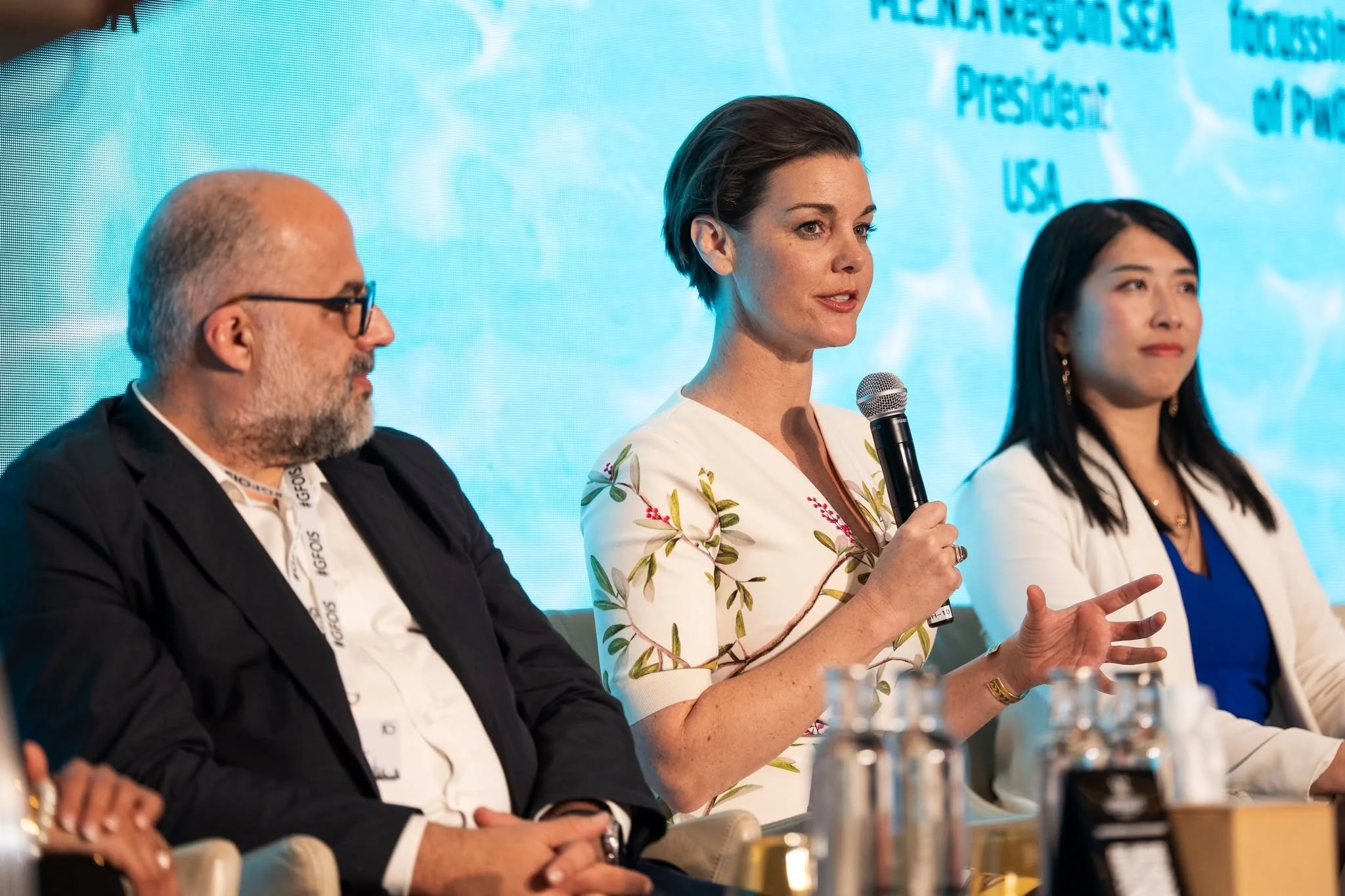
At the Global Family Office Investment Summit — a room representing more than $1 trillion in investable wealth — Regenerative Infrastructure Holdings founder Katie Hilborn presented the financing architecture behind a regenerative infrastructure digital infrastructure model she began developing in Nepal in 2019 and later expanded into regenerative AI data centers.
DUBAI, United Arab Emirates — February 4, 2026 — On the Philanthropy & Impact Investing panel at the 29th Global Family Office Investment Summit, Katie Hilborn, Founder and Managing Director of Regenerative Infrastructure Holdings (RIH), introduced two elements of her model to the assembled capital: Regenerative Capital Stacks, the financing framework she has built, and the regenerative AI data center, the class of infrastructure it is designed to fund. The Summit convened more than 300 family offices, sovereign wealth funds from across the Middle East, and principal families from every continent.
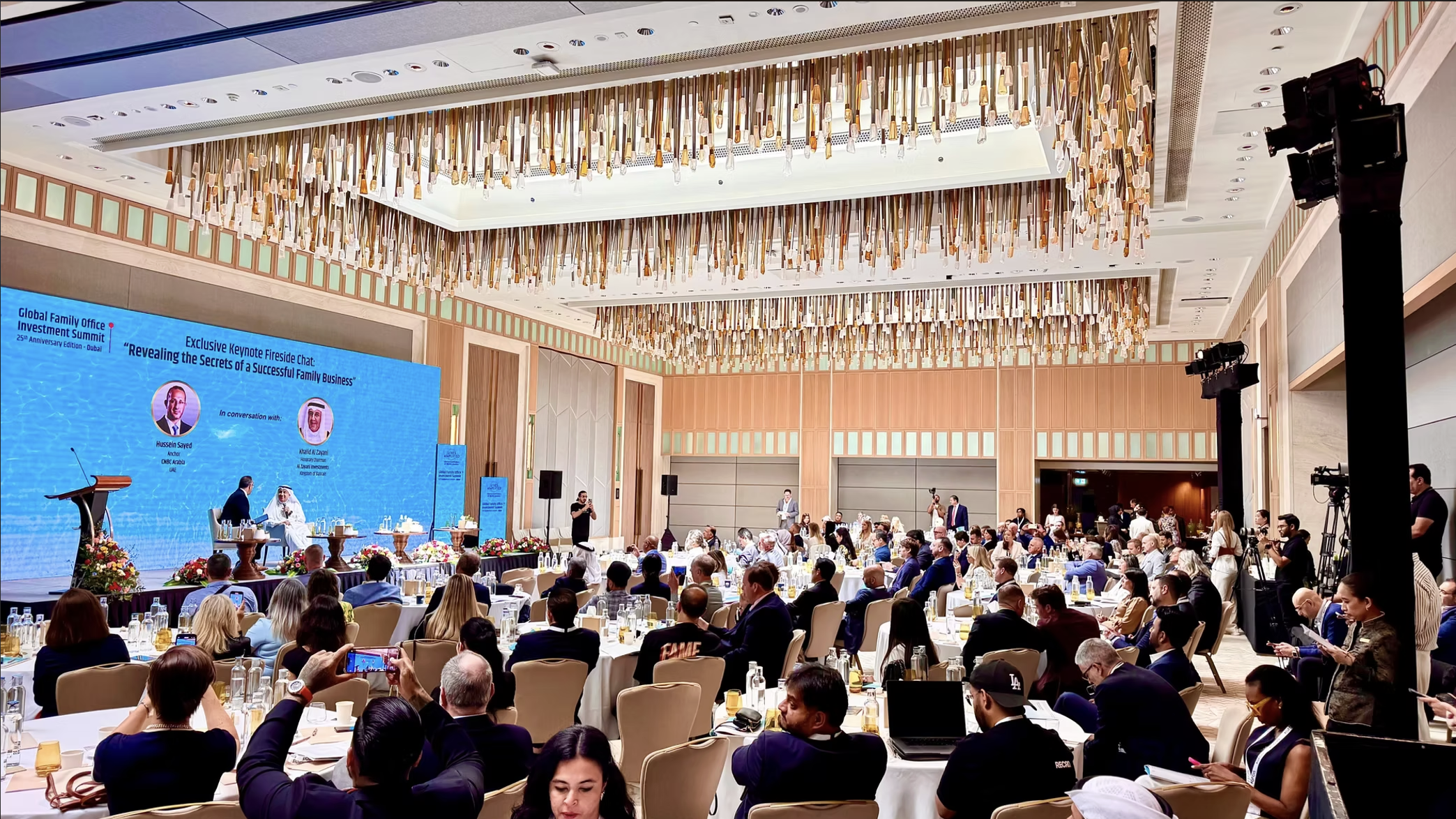
Her argument to the room was that legacy and impact are not separate objectives. They are the same question, answered by how a system is built.
Regenerative Capital Stacks operate in three functions: catalytic capital initiates, blended capital scales, and stewardship structures maintain alignment over time. Revenue from the infrastructure sustains all three — a return structured so that capital and regeneration compound together, rather than one at the expense of the other.
The infrastructure those stacks fund is what Hilborn coined, in 2022, the regenerative AI data center: an AI data center whose technology and surrounding systems are designed together to measurably strengthen the place that hosts it — its energy, water, ecology, community economies, and governance — instead of depleting it. Each facility is built to return value to the place that hosts it. Revenue circulates through a Community Trust before distribution, and waste heat and economic activity stay local before moving outward. Together, these facilities are built to what Hilborn calls Regenerative Intelligence Infrastructure™: a framework for designing and governing AI infrastructure, and the category of infrastructure built to it.
"Most capital still treats return and regeneration as a trade-off," Hilborn told the panel. "They are not. A Regenerative AI Data Center is built so the energy, the community, and the ecology around it strengthen as the system runs. The return and the regeneration are the same engine. That is what we finance."
Regenerative Capital Stacks did not begin in a spreadsheet. They began in the field — two decades of humanitarian work in which Hilborn watched value pass through communities without staying, and drew the principle that now governs the model: systems that do not circulate their own value cannot sustain themselves.
Phase 1 is underway in Nepal: a joint venture with Mountain Solar, powered by run-of-river hydropower and solar on a 100% renewable national grid. Between 1% and 5% of gross revenue flows to a Community Trust as first priority before distribution. Waste heat returns to local enterprise, and compute capacity remains partly sovereign to the nation that hosts it. Additional projects are in discussion in several African countries and North America.
Hilborn received the Summit's Lifetime Achievement Award the same day, recognized for a body of work spanning two decades of humanitarian and infrastructure efforts — covered in a companion piece.
"What we presented in Dubai is no longer an argument," Hilborn said. "It is a build schedule — and the first system is in development now."
Speaking at Global Family Office Investment Summit. Regenerative Capital Stacks & Regenerative AI Data Centers.
